
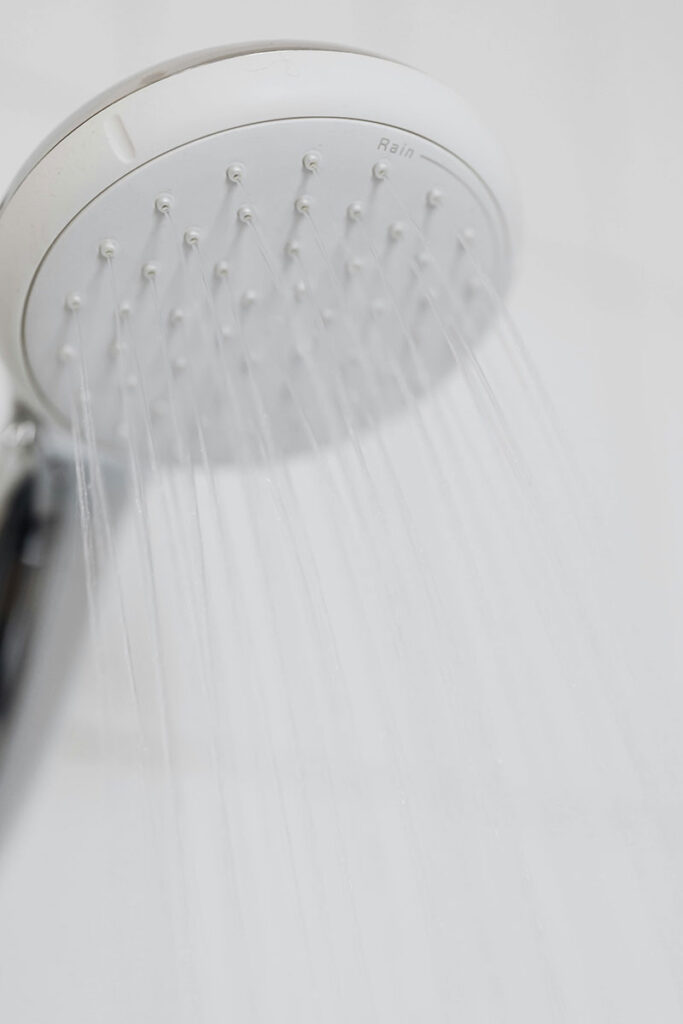
You might think that when it comes to a shower, it’s all straight forward – you just turn the dial and the water comes on, what is there to worry about? Well, when it comes to SAP (Standard Assessment Procedure), actually, quite a lot…
In SAP calculations there has been an input since the changes introduced in 2022 that means we now must input the flow rate of any showers that are installed.
Design Stage vs. As-Built Stage
At design stage we usually revert to the default flow rates dependent on the type of system, so for example an unvented system would have a default flow rate of 11 ltrs per minute, a vented system of 12 ltrs per minute.
At the as built stage however, we must input the actual flow rate, and this is where there can be problems.
Part G water calculations require that shower flow rates are input into that calculator measured at 3 .0 bar. This is fine if the total water use if no more than 125 ltrs per person per day.
In SAP there is a box that we tick to confirm that this target has been met, again fine if it has.
In the water heating section of SAP we must also input the individual shower flow rates. However, in SAP, according to Table J4 of the SAP document, the pressure of the flow rate is not specified but it does state in “accordance with Approved Document G of the Building Regulations”. This would suggest that it should be input into SAP with the same pressure as in the Water calculator
The Problem with Supplier Data
Shower manufacturers often list flow rates, but they don’t always specify the pressure at which those rates are measured. Many give numbers based on low pressure, which results in lower reported flow – and can make a shower appear more efficient than it really is.
This leads to errors when the real numbers are entered into SAP at the correct pressure.
Real-World Example: A 10-Point SAP Drop
We recently worked on a project where the design-stage flow rate was set to 11 litres per minute. However, once measured at 3.0 bar, the as-built flow rate came in at 30 litres per minute. Supplier flow data may be misleading – so always verify the pressure its measured at.
This caused a drop of 10 SAP points, which meant the dwelling failed its energy assessment – all because of the shower!
Fortunately, this was resolved by fitting flow restrictors bringing the flow back down 10 ltrs per minute, but it does illustrate just how influential and important shower flow rates are to ensure an overall pass.
Why This Matters
A single shower can significantly affect your building’s Primary Energy Rating and overall SAP score. So, whether you’re a developer, self-builder, or designer, don’t underestimate the importance of accurate shower flow data.
Need help getting your SAP calculations right the first time?
Get in touch with Energy Saving Experts – we’re here to make energy compliance simple and stress-free.